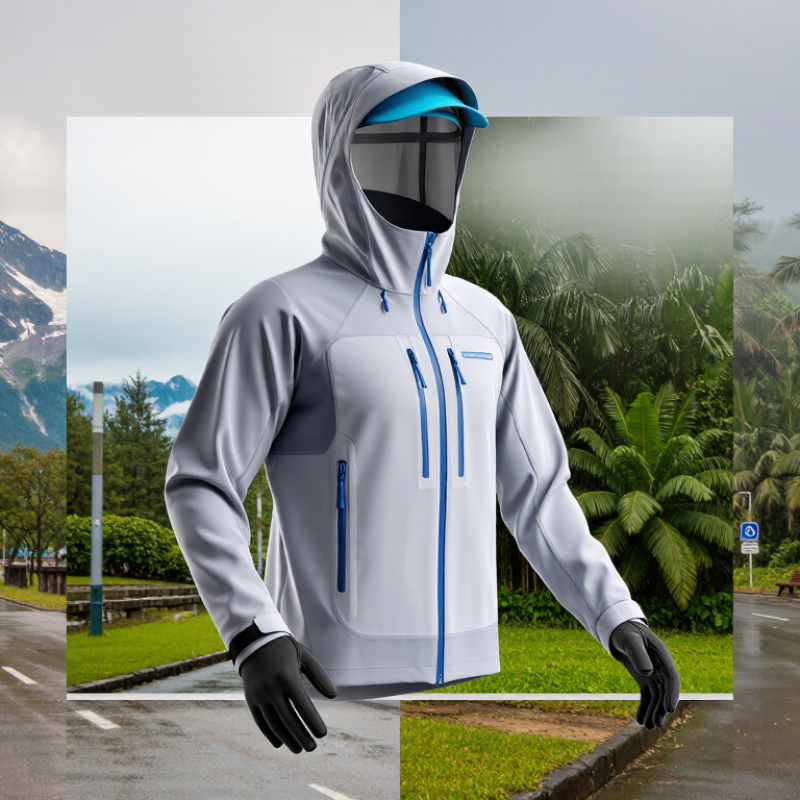
The 2026 Best Hiking Raincoat for Global Buyers? This question deserves more than glossy claims. Outdoor participation is still expanding. The Outdoor Industry Association’s 2024 Outdoor Participation Trends Report recorded 175.8 million American participants in 2023. That growth reflects more hikers, changing weather, and higher expectations for dependable protection.
Global buyers face different realities. Alpine rain demands strong membranes and sealed seams. Tropical trails require airflow. Urban-to-trail users may prioritize light weight and packability. A serious Hiking Raincoat must balance waterproofing, breathability, durability, fit, and repairability. No jacket wins everywhere.
Outdoor gear educator Andrew Skurka offers a practical reminder: “The best gear is the gear you actually use.” His point matters. A stiff coat left at home offers no protection. A lightweight shell with a clear hood, glove-friendly zippers, and a stable hem may perform better in real conditions.
This guide will compare leading 2026 models through measurable and practical criteria. These include water resistance, breathability ratings, seam construction, hood adjustment, fabric weight, and long-term value. We will also consider regional weather patterns and sizing differences.
Laboratory numbers help. They do not tell the whole story. A high hydrostatic-head rating cannot fully predict comfort under a loaded backpack. Even expert testing has limits. Personal layering habits, body shape, and maintenance can change results.
The European Outdoor Group’s market reporting also shows continued attention toward participation, product quality, and responsible consumption. Buyers increasingly want equipment that lasts beyond one wet season. That expectation is reasonable. It is also difficult to satisfy perfectly. Our comparison will examine the compromises honestly, helping hikers choose a raincoat suited to their terrain, climate, budget, and actual habits.
What Defines the Best Hiking Raincoat in 2026?
The best hiking raincoat balances waterproofing, breathability, movement, and repairability. EN 343 classifies top protection at over 20,000 Pa water pressure. Its highest breathability class requires a Ret value of 20 or below. These figures matter, but laboratory tests cannot copy every mountain storm.
The Outdoor Industry Association’s 2024 report recorded 175.8 million U.S. outdoor participants in 2023. That scale reflects varied users, from casual walkers to experienced trekkers. A reliable coat should therefore offer adjustable cuffs, a secure hood, and pockets reachable with a backpack. Ventilation is equally important. A jacket can block heavy rain yet feel clammy during a steep climb. No design wins every condition. Fit remains surprisingly personal.
Tips: Check the hood while wearing your helmet or cap. Test pocket access with loaded shoulder straps. Look for taped seams, a two-way zipper, and a repair service. The World Meteorological Organization reported that 2024 was the warmest year recorded, reminding buyers that changing weather deserves flexible layering. Choose a shell over thick insulation when conditions vary. Reapply durable water repellent only when fabric begins absorbing water. It is easy to overvalue impressive ratings. I sometimes do. Field comfort, noise, and drying time deserve equal attention.
Hydrostatic head indicates how much water pressure a raincoat fabric can resist before water passes through. The chart converts commonly used waterproof-fabric reference levels from millimetres of water pressure into kilopascals using 1 mmH₂O = 9.80665 Pa. For global hiking use, waterproof fabric should be combined with sealed seams, a protective hood, adjustable cuffs, ventilation, low weight, and a fit that allows layering.
Note: Hydrostatic-head performance is a fabric measurement, not a complete product-quality score. Actual protection depends on construction, wear, washing, and field conditions.
2026 Best Hiking Raincoat for Global Buyers?
Choosing a hiking raincoat starts with numbers, but numbers need context. ISO 811 measures water resistance through hydrostatic pressure, commonly reported in millimeters. A 10,000 mm fabric can handle steady rain, yet saturated shoulder straps may still create leaks. Seams, zippers, and hood design often decide real performance. I have found that a carefully sealed 8,000 mm jacket can outperform a poorly finished 20,000 mm one.
Breathability requires a separate check. ISO 11092 measures evaporative resistance, or RET; lower RET indicates better moisture transfer. Some reports use MVTR instead, measured under ASTM E96 conditions. These figures are not directly interchangeable. The Outdoor Industry Association’s 2024 participation report shows continued interest in outdoor recreation, but it does not prove one fabric suits every climate. That distinction matters for global buyers. A humid tropical trek needs stronger ventilation than a cold, dry trail.
Weather protection also depends on exposure. The IPCC Sixth Assessment Report states that heavy precipitation generally becomes more intense as the climate warms. Look for an adjustable hood, storm flaps, articulated sleeves, and a hem that stays below a loaded hip belt. Check the care label, too. Detergent residue can reduce water repellency. I sometimes overvalue laboratory ratings and undercheck fit. That is a mistake. Try the coat with gloves and a pack before buying. No rating predicts every storm.
When choosing a hiking raincoat, match its features to the weather, terrain, and pace. A jacket for humid forest trails needs reliable waterproofing and strong breathability. Otherwise, sweat may soak your base layer from inside. Pit zips help.
For heavy rain, check the hood, cuffs, storm flap, and sealed seams. The hood should turn with your head without blocking side vision. Adjustable cuffs keep water away from your wrists while gripping trekking poles. On exposed ridges, wind resistance matters as much as waterproofing. A light shell can flap loudly and feel unstable in strong gusts. I have found that a slightly longer cut protects better when kneeling or crossing wet ground.
Cold conditions require room for insulation, but excessive space can let wind enter. Choose a hem that tightens securely, especially during steep descents. For warm-weather hikes, lower weight and ventilation usually matter more than thick fabric. A two-way zipper can improve airflow, though it may catch on a loaded hip belt. Check pocket placement with your backpack before buying. Pack access can be awkward.
No jacket solves every problem. I still carry a small repair patch after one sharp branch opened a seam. Care also affects reliability: dry the coat fully, clean it gently, and inspect the hood cord before long trips. A raincoat that performs well in a shop may feel different after six hours of climbing. Test it with your actual pack.
2026 Best Hiking Raincoat for Global Buyers?
The best hiking raincoat is not identical for every climate or body shape. Start with fit. Try it over your usual mid-layer, then lift both arms. The hem should remain near your hips, while sleeves must cover your wrists. A shaped hood should turn with your head without blocking side vision.
During field testing, I prefer adjustable cuffs and a two-way front zip for steep, wet trails. My own mistake was choosing a slim cut that looked neat but restricted movement.
Material affects comfort as much as waterproofing. Look for a waterproof rating suited to your use, and check whether seams are fully taped. A breathable membrane can reduce sweat during long climbs, but no fabric eliminates moisture in humid weather.
Three-layer construction often feels durable, while lighter two-layer designs may pack smaller. For global buyers, consider strong sun, cold rain, and frequent washing. Care instructions matter. I sometimes forget this part.
Tips:
Packability should be tested, not guessed. Place the coat inside its pocket or stuff sack, then measure it beside your water bottle. Choose a hood cord that works with gloves.
Avoid excessive pockets if weight matters. Before buying, read independent user reports from climates resembling your own.
A raincoat that packs beautifully may still feel clammy after an hour.
2026 Best Hiking Raincoat for Global Buyers?
Global buyers should treat sizing as a field decision, not a shopping guess. Measure your chest, shoulder width, sleeve length, and waist over the layers you actually hike in. A thin base layer needs less room than a fleece and insulated vest. Check both centimetres and inches, because conversion errors are surprisingly common. I once chose by chest measurement alone. The sleeves were short when I raised my arms.
Look for an adjustable hood that turns with your head, sealed seams, and a hem that covers your backpack belt. A raincoat advertised as waterproof may use different test methods across markets. Ask suppliers for fabric water-resistance, breathability, and seam-sealing data from recognised laboratories. EN 343 may apply to rain-protective clothing in European markets, while ISO 13688 covers general protective-clothing requirements. These standards do not replace local labeling or import checks. Verify the destination requirements.
Care affects real performance. Follow the sewn label, wash with mild detergent, and avoid fabric softener. It can reduce water-repellent performance. Hang the coat fully open after a wet hike, then inspect the hood cord, cuffs, and seam tape. A durable water-repellent finish may need renewal after repeated washing. Test it with a small splash first. Do not assume a fresh-looking surface still performs well. My own care routine is imperfect, especially after late returns, but five minutes of drying prevents unpleasant storage smells.
| Buying Dimension | Recommended Specification | Why It Matters for Hiking | Global Buyer Checks | Practical Care or Use Notes |
|---|---|---|---|---|
| Weather Protection | Waterproof-breathable shell Choose a fully waterproof construction rather than a water-resistant windbreaker for sustained rain. | A hiking raincoat must prevent liquid water from entering while allowing some water vapour to escape during activity. | Confirm whether the garment is described as waterproof, not only showerproof or water-repellent. Check the intended climate and activity level. | Water repellency can decline with dirt, abrasion and washing even when the waterproof membrane remains functional. |
| Hydrostatic Waterproofness | At least 10,000 mm recommended for regular hiking Higher values, such as 20,000 mm or more, provide additional margin for prolonged rain, kneeling or pack pressure. | Hydrostatic head indicates the pressure of water a fabric can resist in a laboratory test. It is only one part of real-world performance. | Ask which test method was used, such as ISO 811 or an equivalent national method. Do not compare figures without checking the test basis. | Pressure from shoulder straps, sitting or leaning can challenge fabric and seams more than light rainfall. |
| Breathability | Balanced moisture management Look for a stated moisture-vapour transmission or a clearly defined breathability rating. | Breathability helps reduce internal condensation, especially during uphill walking and in warm, humid conditions. | Breathability results vary by test method. Compare garments tested by the same method and consider pit zips or other ventilation openings. | Keep the shell clean and avoid fabric softener, which can impair performance. Open vents before the inside becomes heavily damp. |
| Seam Construction | Fully taped seams Critical seams should be sealed with waterproof tape or an equivalent seam-sealing process. | Needle holes and seam lines can leak even when the main fabric has a high waterproof rating. | Verify whether seams are fully taped or only critically taped. Inspect hood, shoulders, armholes, pockets and hem. | Do not pull or iron seam tape. Store the garment dry and avoid long-term compression while damp. |
| Hood Design | Adjustable, helmet-compatible option A brim or structured peak is useful for directing rain away from the face. | A well-adjusted hood improves visibility and reduces water entering around the neck. | Check adjustment points, collar height, hood volume and whether the hood remains secure in wind. | Close hook-and-loop fasteners before washing to reduce snagging. Dry the hood fully before storage. |
| Fit and Layering | Allow room for base and mid-layers The hem should cover the upper hips, and the sleeves should remain protective when the arms are extended. | A close fashion fit may restrict movement or compress insulation. An excessively loose fit can increase flapping and heat loss. | Use the garment's body-measurement chart rather than relying only on S, M, L or regional labels. Check whether measurements are body or garment measurements. | Test the fit while wearing the layers and backpack intended for the trip. Confirm that pockets remain accessible with hip belts fastened. |
| Core Sizing Measurements | Chest, waist, hip, sleeve and back length Measure the body in light clothing and keep the tape level. | Different regions use different grading systems, and letter sizes are not globally uniform. | Record measurements in centimetres and inches. Check the supplier's tolerance, usually stated separately from the nominal size chart. | For between-size measurements, choose based on the required layering and the garment's intended fit: trim, regular or relaxed. |
| International Size Information | Use dual-unit charts Provide centimetres and inches, plus the product's intended fit description. | Conversions between regional size labels are approximate and can vary between manufacturers. | Request a measurement chart for every model or production batch. Do not assume that one supplier's medium matches another's. | Keep the original measurement chart with purchasing records to simplify repeat orders and returns. |
| Relevant Standards | EN 343 For protective clothing against rain, EN 343 evaluates waterproofness and water-vapour resistance. ISO 811 is commonly used for hydrostatic pressure testing. | Standards create a common testing framework, but compliance does not guarantee identical comfort or durability in every design. | Ask for the standard number, edition or test report scope. Confirm whether the entire garment or only the fabric was tested. | Standards should complement, not replace, inspection of construction, fit, ventilation and intended use. |
| Water-Repellent Finish | Durable water repellent on the face fabric The finish should make rain bead and run off rather than immediately wetting the outer textile. | A functioning face finish can help preserve comfort and reduce the chance of the outer fabric becoming saturated. | Ask whether the finish is fluorocarbon-free or based on another chemistry, and follow applicable import or environmental requirements. | Wash when dirty, reactivate only according to the care label, and use a compatible reproofing treatment when beading no longer returns. |
| Care Label | Follow the sewn-in care instructions Typical guidance includes a gentle wash, no fabric softener and thorough drying. | Incorrect detergents, excessive heat and aggressive spinning may damage coatings, membranes, seam tape or trims. | Check care symbols, maximum wash temperature, tumble-drying permission and whether professional cleaning is prohibited. | Close zippers, remove loose items, rinse detergent thoroughly and never store the raincoat while wet. |
| Packability and Weight | Choose according to trip length Light shells suit emergency or fast-and-light use; more durable shells are preferable for frequent pack contact and rough terrain. | Lower weight saves pack space, while heavier fabrics can provide greater abrasion resistance and longer service life. | Compare weight in the same size and confirm whether the stated weight includes the hood, stuff sack or accessories. | Use a loose pack position when possible. Avoid storing the garment compressed for extended periods. |
| Durability and Abrasion | Reinforced high-contact zones Look for robust fabric or reinforcement around shoulders, cuffs, hem and pocket openings. | Backpacks, branches, rock surfaces and repeated pack movement can wear the outer textile and seam areas. | Ask about fabric composition, denier, weave, abrasion testing and repair options. These details should be treated as model-specific. | Clean mud promptly, avoid unnecessary contact with rough surfaces and repair small tears before they enlarge. |
| Functional Features | Adjustable cuffs, hem and ventilation Water-resistant zippers or storm flaps can improve protection; pit zips can improve airflow. | Adjustability limits rain entry and helps regulate temperature during changing activity levels. | Check zipper direction, pocket placement, glove compatibility and whether ventilation openings are protected from direct rain. | Keep zippers free of grit and do not force them. Follow the care instructions for zipper lubrication, if applicable. |
| Final Selection Priority | Fit first, protection second, features third Select the lightest garment that provides the required waterproofness, durability and layering room. | A technically advanced shell is less useful if it restricts movement, leaks at the seams or does not fit over the user's layers. | Before purchase, confirm size chart, test standards, care label, warranty terms, country-specific labeling and return conditions. | Inspect the garment before every major trip and reproof or repair it when performance visibly declines. |