How Much Does Injection Molding Cost?
How much does injection molding cost? The honest answer depends on far more than the price of plastic resin. A basic consumer part may cost a few thousand dollars to launch, while complex tooling can require tens of thousands. Production costs then depend on cycle time, material, labor, machine size, quality checks, and order volume. Small details matter.
An experienced manufacturer usually separates the estimate into tooling, part production, finishing, packaging, and shipping. The mold may use aluminum for shorter runs or hardened steel for demanding, high-volume production. A simple two-plate mold is usually less expensive than a multi-slide or hot-runner system. Tight tolerances, textured surfaces, undercuts, and complex ejection features can also increase the injection molding cost. A one-gram weight difference may seem minor, yet it becomes significant across hundreds of thousands of parts.
Design changes often create the largest savings. Thick walls can cause sink marks, extended cooling time, and unnecessary material use. Draft angles, uniform wall thickness, and sensible gate locations help reduce these risks. Still, no calculator is perfect. Early estimates can miss inspection requirements, mold maintenance, freight, or unexpected design revisions. That is why reliable planning includes a design-for-manufacturing review and an itemized quotation. Compare assumptions, not only totals. Ask who owns the mold, how many cavities it contains, and what happens if production volume changes. The lowest quote may not be the lowest final cost. Careful questions reveal the real price.
What Makes Up Injection Molding Cost: Tooling, Material, Labor, and Overhead
Injection molding cost is rarely just a machine-hour calculation. Tooling usually creates the largest upfront expense. A simple aluminum mold may cost several thousand dollars, while complex steel tooling can exceed $50,000. Cavities, slides, cooling channels, surface finishes, and expected mold life all change the price. The U.S. Census Bureau’s manufacturing data also shows why material costs matter: raw materials remain one of the largest expense groups in manufacturing. Resin selection, part weight, scrap rate, and color additives directly affect every cycle.
Material is only one part of the quote. Labor includes setup, inspection, trimming, packing, and mold maintenance. U.S. Bureau of Labor Statistics data places tool-and-die makers’ median annual pay near $61,000, before benefits and payroll costs. Local wages can differ sharply. Overhead is less visible, but it never disappears. The U.S. Department of Energy’s 2018 Manufacturing Energy Consumption Survey found process heating represented about 51% of manufacturing energy use. Electricity, cooling water, rent, quality systems, repairs, and machine depreciation must therefore be spread across production volume.
A low unit price can hide expensive tooling. A high unit price can reflect a small order. The spreadsheet may still be wrong. Resin prices also change, and the U.S. Producer Price Index tracks these movements across material categories. Request a cost breakdown with tooling, material, labor, overhead, scrap, and shipping shown separately. That detail makes weak assumptions easier to challenge.
How Much Does Injection Molding Cost? - What Makes Up Injection Molding Cost: Tooling, Material, Labor, and Overhead
| Project Profile |
Typical Annual Volume |
Tooling Cost
(One-Time) |
Material Cost
(Per Part) |
Direct Labor
(Per Part) |
Overhead
(Per Part) |
Recurring Cost
(Per Part) |
First-Year Unit Cost* |
| Simple, Low-Volume Part |
5,000–15,000 parts |
$3,000–$8,000 |
$0.10–$0.35 |
$0.10–$0.25 |
$0.12–$0.30 |
$0.32–$0.90 |
$0.72–$2.50 |
| Standard Production Part |
20,000–100,000 parts |
$10,000–$35,000 |
$0.25–$0.90 |
$0.08–$0.20 |
$0.15–$0.35 |
$0.48–$1.45 |
$0.58–$3.20 |
| Complex, Tight-Tolerance Part |
50,000–250,000 parts |
$25,000–$100,000+ |
$0.60–$2.50 |
$0.15–$0.40 |
$0.25–$0.60 |
$1.00–$3.50 |
$1.10–$5.50+ |
| Multi-Cavity, High-Volume Part |
250,000+ parts |
$60,000–$250,000+ |
$0.20–$1.20 |
$0.03–$0.12 |
$0.08–$0.25 |
$0.31–$1.57 |
$0.55–$2.57+ |
*Calculation basis: First-year unit cost includes the one-time tooling cost amortized across the stated annual production volume, plus material, direct labor, and manufacturing overhead. These planning ranges assume a thermoplastic injection-molded part produced in a standard industrial environment. Actual pricing varies with part size, resin type, mold steel, cavity count, cycle time, tolerances, surface finish, secondary operations, quality requirements, packaging, shipping, and production location.
Mold Costs: Why Tooling Commonly Ranges from $1,000 to $100,000+
How Much Does Injection Molding Cost?
Mold Costs: Why Tooling Commonly Ranges from $1,000 to $100,000+
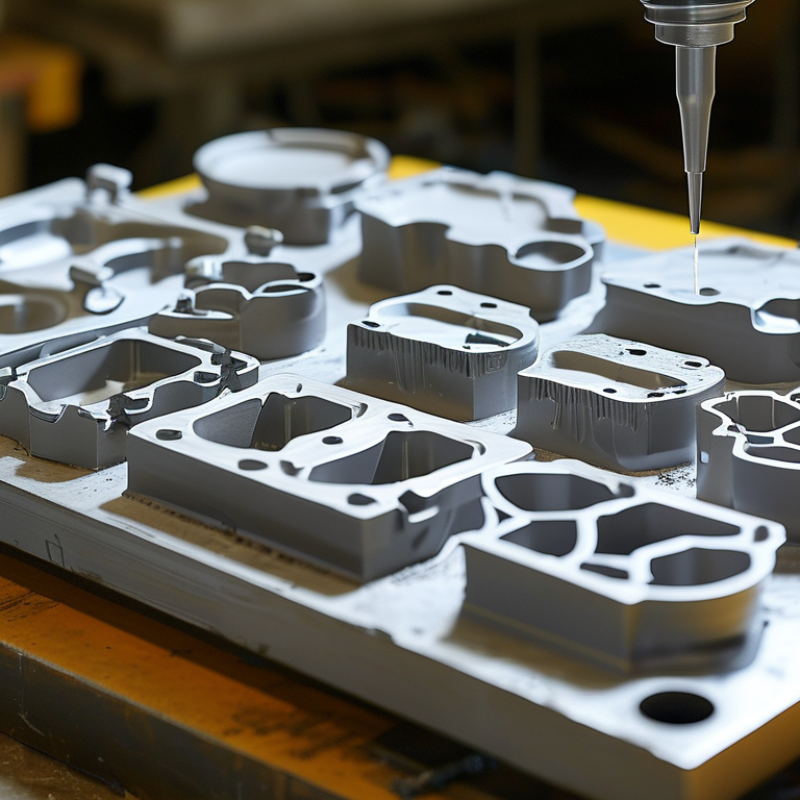
Injection molding tooling can cost from about $1,000 to more than $100,000. The range is wide because every mold reflects a different production challenge. A simple prototype mold may use aluminum and one cavity. It can produce limited quantities at a lower cost. A hardened steel mold for millions of parts requires greater precision, stronger components, and longer machining time.
Part geometry strongly affects the quotation. Deep ribs, thin walls, undercuts, and tight tolerances often require slides, lifters, or special machining. A mold with eight cavities costs more than a single-cavity tool, but it can reduce the per-part price during high-volume production. Cooling channels also matter. Poor cooling may create warping, longer cycle times, and avoidable waste.
In practice, the cheapest mold is not always the most economical choice. I have seen early estimates miss maintenance, sampling, and design-change costs. That mistake can become expensive. Ask whether the quote includes mold design, steel, surface finishing, testing, shipping, and future repairs. Material selection matters too. Soft steel may reduce the initial bill, while hardened steel can support demanding production. The right decision depends on annual volume, part complexity, expected mold life, and acceptable cosmetic variation. Leave room for revision. Real parts sometimes challenge the drawing.
How Much Does Injection Molding Cost?
Typical injection mold tooling costs range from approximately $1,000 for simple prototype molds to more than $100,000 for complex, high-volume production tooling. The final price depends on mold size, cavity count, material, tolerances, cooling design, and expected production volume.
These are representative industry cost ranges for tooling only. Part design, engineering, sampling, production parts, freight, and maintenance may be quoted separately.
Machine and Cycle Costs: How 10–60-Second Cycles Affect Part Pricing
How Much Does Injection Molding Cost?
Machine and cycle time often determine the real cost of an injection molded part. A 60-second cycle produces 60 shots per hour. A 30-second cycle produces 120 shots. At a machine rate of $100 per hour, one cavity costs about $1.67 per shot at 60 seconds, but only $0.83 at 30 seconds. These figures exclude material, labor, tooling, and quality inspection.
The Plastics Industry Association’s 2023 industry statistics report shows that U.S. plastics manufacturing remains highly dependent on energy, equipment, and labor efficiency. Energy is only one part of the equation. The U.S. Department of Energy also identifies injection molding as a process where idle time and inefficient equipment can increase operating costs. A 10-second cycle may reduce machine cost to roughly $0.28 per part at the same hourly rate. Multi-cavity molds reduce this figure further.
Cycle time is not simply a speed contest. Cooling usually controls the pace, especially with thick walls or poor mold temperature control. A faster cycle can create warpage, short shots, or higher scrap rates. That mistake costs more than a few saved seconds. In practice, a 40-second stable cycle may outperform a risky 25-second cycle. Cost estimates should therefore include verified cycle trials, cavity count, expected uptime, and scrap allowance. Published machine-hour rates are useful benchmarks, not guarantees. Actual pricing still depends on regional labor, machine size, maintenance, and production volume.
Material and Labor: Why Resin Can Represent 30–70% of Unit Cost
How Much Does Injection Molding Cost?
Resin often represents 30–70% of an injection-molded unit cost. The percentage changes with part weight, resin grade, scrap, and order volume. A 40-gram part using resin priced at $2.20 per kilogram contains $0.088 of material. With 8% scrap, that becomes about $0.095. The number looks small, but thousands of parts quickly expose the difference.
Global supply affects this calculation. PlasticsEurope’s Plastics—the Fast Facts 2024 reports 413.8 million tonnes of plastics production in 2023. It also reports only 13.6% recycled production. That gap can influence recycled-content availability and pricing. Labor, cycle time, machine depreciation, packaging, and quality checks then complete the unit-cost picture. A slow 45-second cycle may cost more than a higher resin price. This is where many early estimates fail.
Tips: Ask for resin pricing per kilogram, not only a finished-part quote. Confirm the grade, color, moisture requirements, and expected scrap rate. Use actual part weight after sampling. Recheck the estimate when resin prices move. I would not trust a single supplier quote. Even a careful spreadsheet can miss purging waste, rejected parts, or a longer-than-planned cycle. The U.S. Bureau of Labor Statistics Producer Price Index data can help track manufacturing-cost movement, but it does not replace a plant-level quotation.
Production Volume: When 10,000+ Parts Make Injection Molding Economical
How Much Does Injection Molding Cost?
Production Volume: When 10,000+ Parts Make Injection Molding Economical
Injection molding becomes financially attractive when production volume passes roughly 10,000 parts. At that level, the mold’s upfront cost spreads across thousands of units. A tool priced at $8,000 adds $0.80 per part before production costs. With only 500 parts, the same tool adds $16 each. That difference often changes the manufacturing decision.
Real pricing also includes resin, machine time, labor, inspection, packaging, and rejected parts. A small housing might need 20 to 40 seconds per cycle, depending on size and cooling.
Material selection matters. Engineering-grade resin may improve heat resistance, but it raises the unit price. Multiple cavities can increase output, although the mold becomes more complex and expensive. Ask for a costed sample run.
Volume alone does not guarantee savings.
Design changes after tooling can create expensive revisions, especially around draft angles, wall thickness, and undercuts. Before approving a mold, confirm annual demand, tolerance requirements, expected tool life, and inspection methods.
From practical quoting work, forecasts are often optimistic. A planned 10,000 pieces may become 3,000. That mistake can erase the expected advantage. Prototype testing and a realistic demand range provide safer evidence than a single spreadsheet estimate.