What is Injection Molding Materials in Manufacturing?
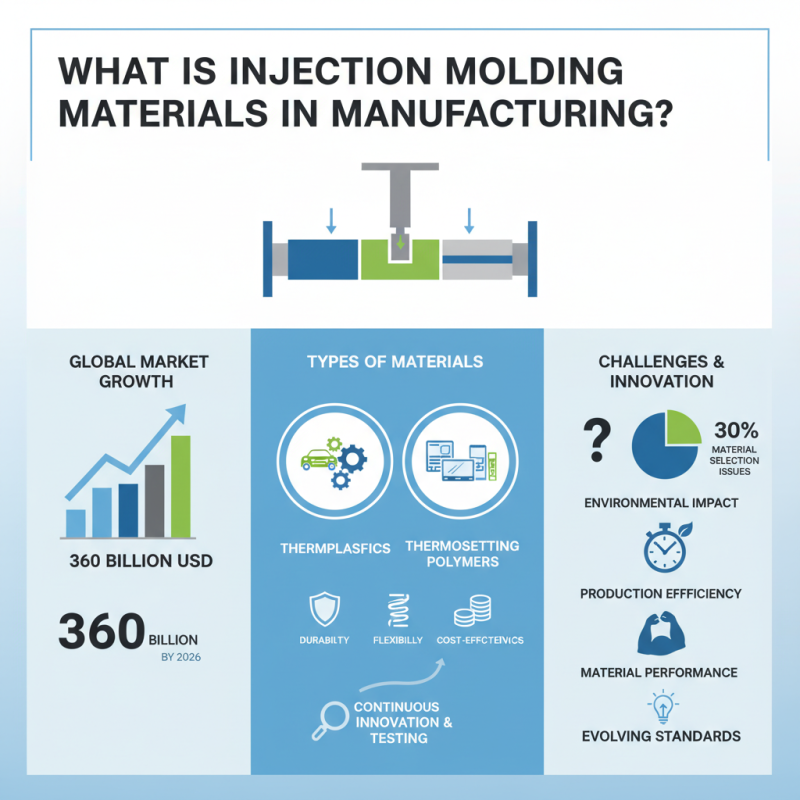
Injection molding is a crucial process in manufacturing, particularly for producing plastic parts. Injection molding materials play a significant role in this process. According to a report by MarketsandMarkets, the global injection molding market is projected to reach USD 360 billion by 2026. This growth underscores the importance of selecting the right materials.
Various materials are used in injection molding, including thermoplastics and thermosetting polymers. Each material offers unique properties, such as durability, flexibility, and cost-effectiveness. However, the choice of injection molding materials can be challenging. Manufacturers must consider factors like production efficiency, material performance, and environmental impact. A study from Plastics Technology highlights that nearly 30% of manufacturers face issues related to material selection.
Despite advancements, challenges remain. For instance, some materials may not provide the desired finish or strength. This raises questions about the effectiveness of current material options. Continuous innovation and testing are essential to meet evolving industry standards. As the market grows, the demand for high-quality injection molding materials will only increase, making it a critical focus area for manufacturers.
Understanding Injection Molding Materials in Manufacturing Processes
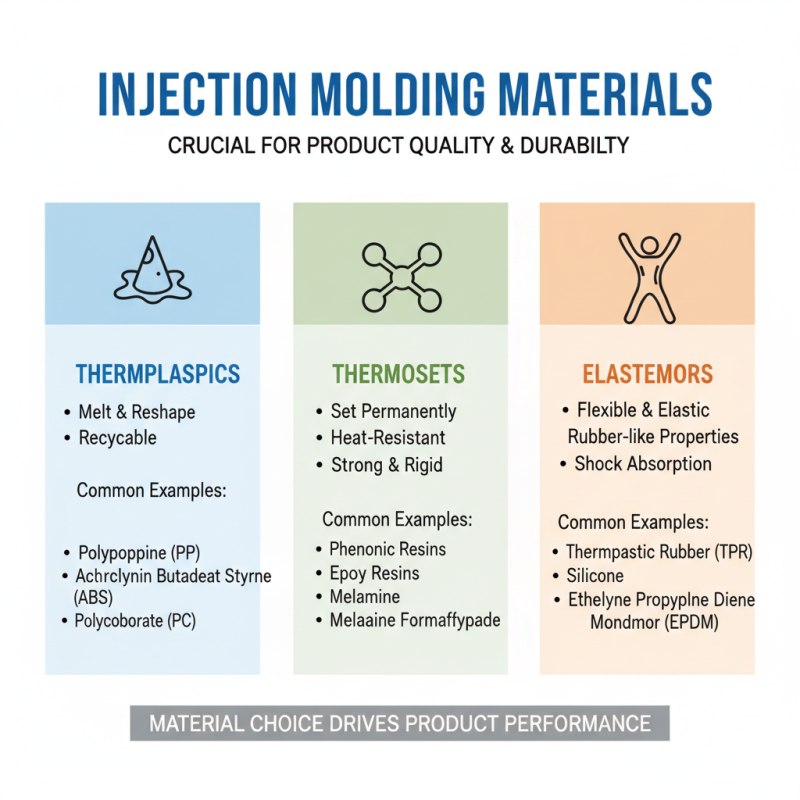
Injection molding is a crucial manufacturing process that relies heavily on selecting the right materials. The choice of material can significantly affect the final product's quality, durability, and functionality. Common materials used in injection molding include thermoplastics, thermosets, and elastomers. Each material has its unique properties, influencing the molding process and the product characteristics.
Thermoplastics are a popular choice due to their versatility and ease of processing. They can be reheated and remolded without losing their properties. On the other hand, thermosets provide excellent heat resistance and structural integrity but cannot be remolded. This aspect can be a drawback if design changes are needed. Elastomers, with their rubber-like elasticity, are great for products requiring flexibility. However, they can complicate the molding process due to their sensitivity to temperature and pressure.
Choosing the wrong material can lead to defects or compromised product performance. This reality needs careful consideration of the desired properties and application requirements. When evaluating materials, manufacturers often face challenges. They must balance cost, performance, and environmental impact. Experimentation with different materials may be necessary to achieve optimal results. Finding the perfect material is a journey of trial and error, requiring both innovation and constant reflection.
Categories of Materials Used in Injection Molding
Injection molding is a popular manufacturing process. It primarily uses materials like thermoplastics and thermosets. These materials play a crucial role in defining the final product's characteristics.
Thermoplastics are widely used due to their versatility. They can be reheated and reshaped. Common examples include polyethylene and polystyrene. These materials are suitable for producing intricate designs. However, they may not withstand high temperatures. This limitation is significant in certain applications.
Thermosetting plastics, on the other hand, are different. They harden permanently after being shaped. Examples include epoxy and phenolic resins. These materials offer better heat resistance. They are often used in electrical components. Nevertheless, once cured, they cannot be reshaped. This rigidity can pose challenges in redesigning products. Choosing the right material is critical. The decision impacts the product’s durability and functionality.
What is Injection Molding Materials in Manufacturing? - Categories of Materials Used in Injection Molding
| Material Category |
Common Properties |
Typical Applications |
| Thermoplastics |
Versatile, recyclability, good impact resistance |
Consumer products, automotive parts, containers |
| Thermosetting Plastics |
High heat resistance, durability, rigidity |
Electrical appliances, automotive components, laminates |
| Elastomers |
Flexibility, stretchability, low compression set |
Seals, gaskets, flexible tubing |
| Metallic Materials |
Strength, heat resistance, weight |
Machinery parts, automotive, aerospace applications |
| Composites |
Lightweight, high strength, corrosion resistance |
Construction, automotive, sporting goods |
Properties and Characteristics of Common Injection Molding Materials
Injection molding materials are crucial in manufacturing. Different materials bring unique properties to products. Common choices include thermoplastics and thermosets.
Thermoplastics, such as ABS, are flexible and durable. They can withstand impact and are easy to mold. However, they may not handle high temperatures well. On the other hand, thermosets offer better heat resistance. They are strong and suitable for complex shapes. Yet, once set, they cannot be reshaped.
Additionally, additives can enhance material properties. For instance, fillers can improve strength and reduce costs. However, using too many additives might compromise other qualities. The choice of material depends on the final product’s requirements. Understanding these characteristics is vital for successful injection molding outcomes.
Properties and Characteristics of Common Injection Molding Materials
The Role of Material Selection in Product Performance and Cost
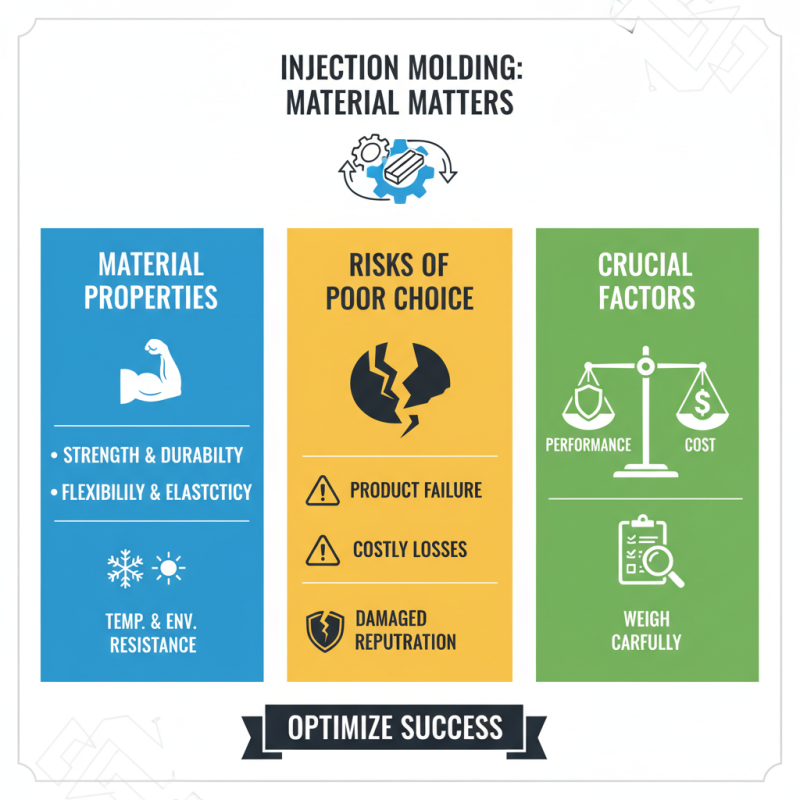
In injection molding, selecting the right materials can drastically impact product performance. Different materials possess unique properties. For instance, some offer great strength, while others provide flexibility. A poor choice can lead to product failure. It might occur if the material cannot withstand stress or environmental factors. This could result in costly returns and damaged reputations. It's crucial to weigh these factors carefully.
Cost is another significant consideration when selecting materials. Some materials are more expensive but may yield better performance. Meanwhile, cheaper options might lead to higher maintenance costs later. Evaluating the long-term implications of material selection is essential. Many manufacturers face a dilemma. Balancing initial costs and product longevity is challenging. Inexperienced teams might overlook critical details. This can affect both budgets and quality.
Ultimately, material selection should align with both performance needs and financial constraints. Each project requires thorough analysis. Small changes in material can lead to significant differences in outcomes. Therefore, open discussions among engineers and designers can yield better choices. Collaboration often results in solutions that may not have been considered initially. The goal is to ensure that the chosen materials genuinely support the project's success.
Innovative Developments in Injection Molding Materials and Sustainability
The landscape of injection molding materials is rapidly evolving. Innovative developments focus on sustainability and performance. Manufacturers are exploring bio-based plastics and recycled materials. These alternatives aim to reduce environmental impact while maintaining product integrity. For instance, some new materials can degrade under certain conditions. This contributes to a circular economy and less waste.
However, the transition to sustainable options is not without challenges. Not all bio-based plastics exhibit the same strength or durability as traditional options. This raises questions about their long-term viability. Additionally, the infrastructure for recycling is often insufficient. Many regions do not have the facilities to process these materials effectively. Therefore, discussions around improving recycling technologies are ongoing.
Sustainability is becoming imperative in the industry. Consumers demand eco-friendly products, pushing companies to innovate. Yet, the balance between cost, quality, and environmental responsibility remains complex. Manufacturers must navigate these aspects carefully. Experimentation with novel materials can yield promising results. It’s essential to assess both their environmental benefits and practical applications. The journey toward sustainability in injection molding is filled with both progress and obstacles.