How to Use Rapid Injection Molding for Fast Prototyping?
In today's fast-paced product development landscape, companies seek efficient methods for prototyping. Rapid injection molding stands out as a pivotal technology in this process. According to Dr. Emily Chen, a leading expert in rapid injection molding, "This manufacturing method allows designers to quickly turn concepts into tangible products."
Rapid injection molding enables the production of small batches of parts swiftly. This is crucial for industries where speed can influence market success. The ability to test and refine designs based on real-world feedback is invaluable. However, not all applications benefit equally from this method. Depending on design complexity, some projects may face challenges during the transition from prototyping to production.
While rapid injection molding showcases efficiency, it also requires careful planning. Material selection and mold design can impact the quality of prototypes. Designers must critically evaluate these factors to maximize advantages. Understanding the trade-offs in speed versus accuracy is essential. Embracing rapid injection molding can lead to great success, yet it requires ongoing reflection and improvement.

Understanding Rapid Injection Molding and Its Benefits for Prototyping
Rapid injection molding is gaining popularity in the prototyping world. This technique allows for faster production cycles compared to traditional methods. It uses a flexible mold, enabling quick changes and iterations. Designers can receive prototypes in days, not weeks. This speed is crucial for rapid market testing.
The benefits include cost-effectiveness and material versatility. With this method, companies can test designs in real-world materials. However, the initial setup can be complex. It's important to refine designs before molding. Many overlook this step and face delays. Understanding material properties is essential for successful outcomes. Mistakes in this phase can lead to wasted resources.
Prototyping with rapid injection molding opens new possibilities. It encourages innovation but requires careful planning. By focusing on detail and precision, businesses can better meet their project goals. Yet, it’s also vital to identify potential pitfalls early in the process. Regular feedback and adjustments can enhance the prototyping experience.
How to Use Rapid Injection Molding for Fast Prototyping?
| Feature |
Description |
Benefits |
Applications |
| Speed |
Rapid injection molding reduces the time taken to create prototypes. |
Quick feedback on design iterations. |
Automotive, Consumer Electronics |
| Cost Efficiency |
Lower costs due to reduced material waste and quicker production times. |
Cost-effective for low-volume production runs. |
Medical Devices, Household Items |
| Material Variety |
Supports a wide range of materials including plastics and elastomers. |
Flexibility in design based on application needs. |
Packaging, Consumer Products |
| Precision |
High precision and repeatability in molding processes. |
Enhanced part performance and quality assurance. |
Aerospace, Electronics |
| Scalability |
Easily scalable from prototyping to production. |
Seamless transition to large-scale manufacturing. |
Industrial Parts, Toys |
Key Materials Used in Rapid Injection Molding for Fast Prototyping
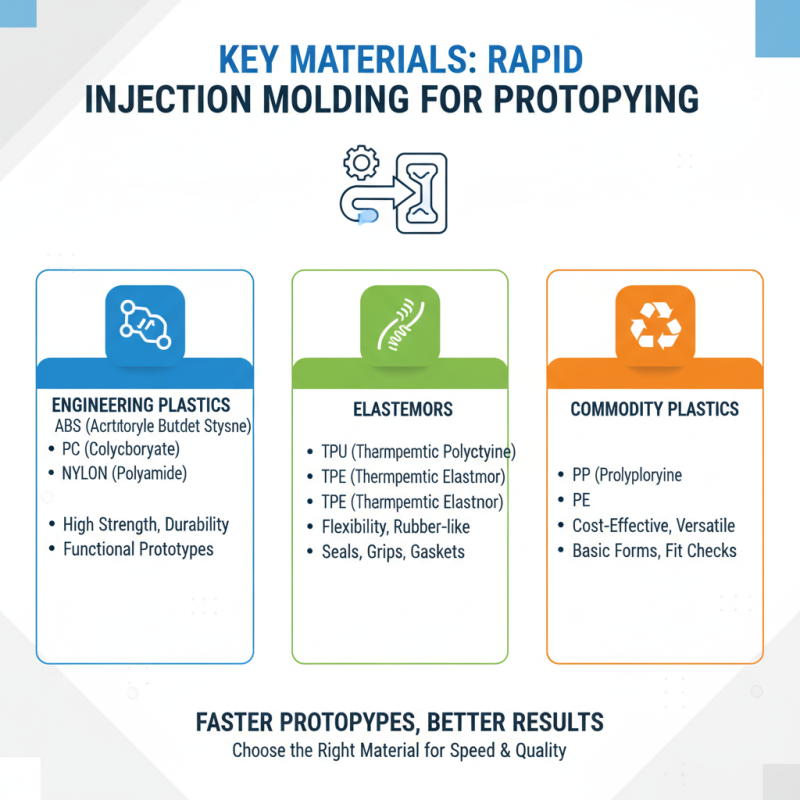
Rapid injection molding is becoming a go-to method for fast prototyping. A crucial component is the choice of materials used. Different materials can significantly affect the quality and speed of prototyping.
Common materials include thermoplastics such as ABS, polycarbonate, and nylon. These materials are versatile and offer good mechanical properties. For instance, ABS is known for its impact resistance and ease of machining. According to a 2022 industry report, about 67% of manufacturers prefer ABS for rapid prototyping. Polycarbonate, on the other hand, provides excellent clarity and toughness, making it suitable for transparent prototypes.
However, issues can arise with material selection. Some materials may not perform well under specific conditions. For example, nylon absorbs moisture, which can cause warping. A study highlighted that 25% of prototype failures are linked to inappropriate material choice. Ensuring correct material selection is critical. Using the right material can expedite the prototyping process and reduce errors in later production stages.
The Process Steps of Rapid Injection Molding for Quick Design Iterations
Rapid injection molding is a powerful tool for quick design iterations. Understanding the process steps can enhance prototyping speed and efficiency. The journey begins with concept development. Designers sketch their ideas, identifying key features and functional requirements. This stage is crucial for defining the direction of the prototype.
Next, rapid tooling is created. This involves making molds from materials like aluminum or even 3D-printed components. While these options are faster and more cost-effective, they may not provide the same durability as traditional steel molds. It’s important to evaluate the trade-offs. How well will the mold hold up during production? Sometimes, the choice of tooling material leads to unexpected challenges.
Once the molds are ready, injection begins. The selected plastic is heated and injected into the molds. After cooling, components are ejected. However, this step is not always flawless. Sometimes, parts may warp or fail to meet design specifications. Frequent iterations are necessary as designers refine their concepts based on these initial outcomes. Continuously evaluating each iteration fosters learning and improvement, ensuring that the final product aligns closely with original goals.
Best Practices for Designing Parts for Rapid Injection Molding
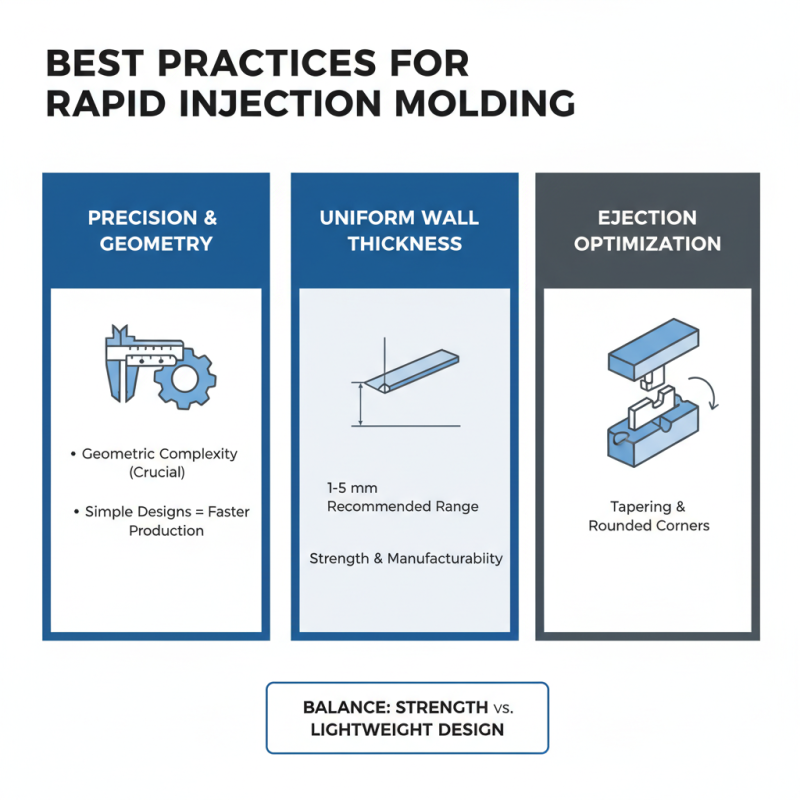
When designing parts for rapid injection molding, precision is key. According to industry reports, geometric complexity is crucial. Simple designs using uniform wall thickness generally lead to faster production times. Tapering and rounding corners help ease the ejection process. The recommended wall thickness is around 1 to 5 millimeters. This ensures both strength and manufacturability. However, achieving the right balance between strength and lightweight design can be challenging.
Choosing the right material also plays a vital role. For quick prototypes, using thermoplastics can reduce cycle time significantly. Data indicates that switching from traditional materials to modern alternatives can decrease lead time by up to 30%. Nevertheless, selecting materials with suitable properties may require multiple iterations. Designers should remain flexible in their material choice. Issues like warping or shrinkage can arise unexpectedly. Continuous testing is important. It helps fine-tune the part design for optimal performance. This phase often reveals unforeseen challenges that need to be addressed before final production.
Common Applications and Industries Utilizing Rapid Injection Molding
Rapid injection molding is becoming increasingly popular across various industries. It offers a faster turnaround for prototypes, making it a favorite in product development. The automotive industry utilizes this process to create complex parts quickly, enabling better design iterations. Manufacturers can test components rapidly, ensuring performance before mass production.
Electronics also benefit from rapid injection molding. With precise molds, companies can produce lightweight and durable housings for devices. This method allows for quick adjustments to design flaws. Similarly, the medical sector leverages rapid molding for producing sterile parts in a timely manner. This is critical for devices that serve life-saving functions.
However, challenges exist. Material selection can affect the final product's quality. Engineers must balance speed with functionality. Not all designs can be efficiently molded, leading to potential wastage. Therefore, thorough refinements during the planning phase are essential. Testing different materials and design tweaks can lead to better outcomes. Each iteration offers learning opportunities, paving the way for improved designs.