
China Top Baseball Shirt Suppliers for Global Buyers

For global buyers, sourcing a dependable Baseball Shirt supplier in China requires more than comparing online catalogs. The right partner must balance fabric quality, production capacity, customization, pricing, and delivery discipline. This guide introduces leading supplier types and explains how buyers can evaluate them with practical evidence. It focuses on factories, trading companies, and specialized sportswear manufacturers serving international markets.

A professional assessment begins with product details. Ask for fabric composition, GSM, colorfastness reports, size charts, and stitching photographs. Request a physical sample before approving bulk production. Examine the collar, sleeve seams, button alignment, embroidery, and printed numbers under normal light. Factory audits can clarify equipment, workforce organization, and quality-control procedures. Verified certifications and clear export documentation also support responsible purchasing. However, certificates alone do not guarantee consistent workmanship. Production records and recent buyer references matter more.

Reliable suppliers should explain MOQ, sample fees, lead times, packaging, payment terms, and after-sales handling in writing. Buyers should compare quotations carefully, because a low unit price may exclude labels, freight, or inspection costs. This article also considers communication speed and technical understanding. Small misunderstandings can distort a team logo or change a sleeve measurement. No supplier is perfect. Even experienced buyers can overlook seasonal capacity pressure or fabric shortages. A careful sourcing process leaves room for questions, revisions, and independent inspection. The goal is not merely to find a cheap Baseball Shirt. It is to build a transparent, repeatable supply relationship that protects quality and customer trust.
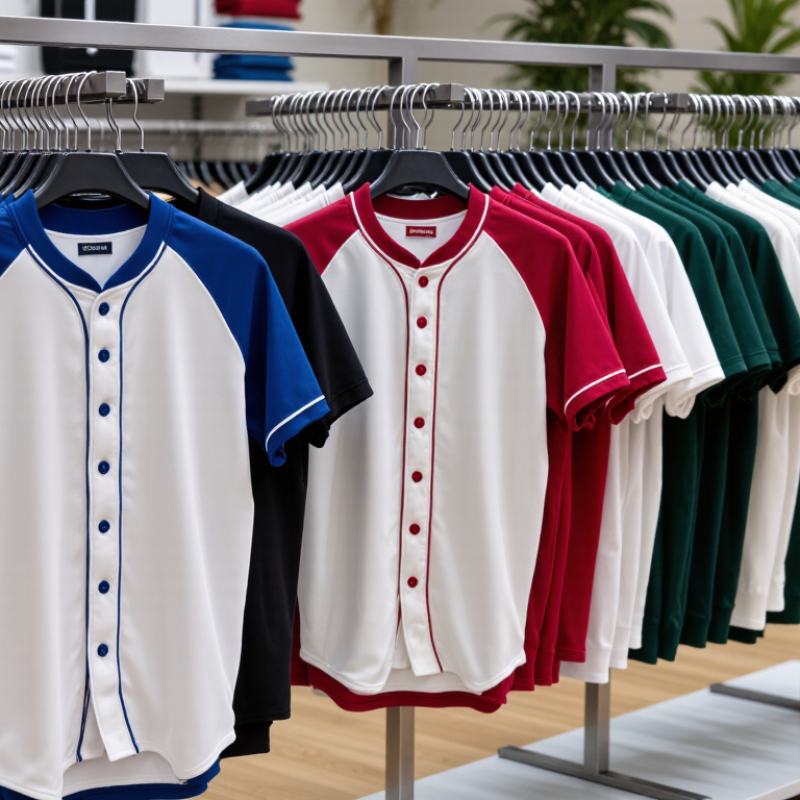
China Top Baseball Shirt Suppliers for Global Buyers

Types of Baseball Shirt Suppliers in China

China’s baseball shirt suppliers generally fall into four groups: OEM factories, ODM manufacturers, trading companies, and specialist custom jersey workshops. OEM factories produce from your tech pack, fabric requirements, and size chart. They suit buyers with established designs and repeat orders. ODM suppliers offer ready patterns, collar shapes, and fabric options. They can shorten development time, but their designs may feel less distinctive.

Trading companies coordinate several factories and often communicate smoothly with overseas buyers. However, production visibility can be weaker. Custom jersey workshops focus on sublimation printing, embroidery, tackle-twill lettering, and small-batch orders. These suppliers are useful for clubs, schools, and trial collections.

The World Trade Organization’s World Trade Statistical Review 2024 confirms China remains a leading global clothing exporter. Meanwhile, Grand View Research projects steady growth in the global sports apparel market through 2030. Demand exists, but competition is intense. A cheaper quotation is not always better.

Tips: Ask for a physical sample before bulk production. Check fabric weight, colorfastness, stitching density, and size tolerance. Request audit records, test reports, and a clear production timeline. The International Trade Centre’s Trade Map can help compare China’s apparel export data with other sourcing markets. I would also test one supplier’s communication during a small order. This is imperfect, yet revealing. Some suppliers promise fast sampling, then delay quietly. Record every specification in writing.

Key Manufacturing Regions and Supplier Capabilities

China Top Baseball Shirt Suppliers for Global Buyers

Key Manufacturing Regions and Supplier Capabilities

China remains a major sourcing base for baseball shirts, supported by dense textile and garment networks. China Customs data placed textile and apparel exports above US$290 billion in 2023. The figure covers many product categories, not baseball shirts alone. That distinction matters.

Guangdong is known for quick sampling, heat-transfer graphics, and flexible small-batch production. Zhejiang offers broad fabric access and mature cut-and-sew capacity. Jiangsu suppliers often handle structured uniforms, embroidery, and repeat orders. Fujian is strong in sportswear materials, moisture management, and performance finishing. Regional strengths overlap. Not every factory fits.

McKinsey’s Sporting Goods 2024 report projected approximately 7% annual industry growth through 2027. This outlook increases pressure on suppliers to shorten development cycles. Reliable manufacturers should provide fabric test results, size-set samples, color approvals, and production inspection records. Look for documented GSM, shrinkage, colorfastness, and seam-strength data. These details decide consistency.

A capable supplier can combine polyester mesh bodies, reinforced collars, elastic cuffs, and durable decoration methods. Sublimation works well for all-over designs, while embroidery suits smaller emblems and names. Buyers should verify compatibility before approving bulk production. Sampling exposes weaknesses. Some factories quote quickly but lack stable finishing control. Others offer excellent workmanship but require higher minimum quantities. Supplier selection therefore needs more than a low quotation; it requires matching regional capability, order scale, testing evidence, and communication discipline.

China Top Baseball Shirt Suppliers for Global Buyers - Key Manufacturing Regions and Supplier Capabilities

Manufacturing Region Relevant Apparel Cluster Typical Baseball Shirt Capabilities Common Fabric Options Decoration and Construction Best Suited Buyer Requirements
Fujian Quanzhou, Jinjiang, and Shishi textile and sportswear cluster Team jerseys, baseball tops, warm-up shirts, fan apparel, cut-and-sew sportswear, and private-label production Polyester interlock, mesh, birdseye knit, recycled polyester, cotton-polyester blends, and moisture-management fabrics Sublimation printing, screen printing, heat transfer, embroidery, tackle twill, rib-knit collars, and contrast piping Custom team uniforms, coordinated sportswear ranges, frequent color changes, and medium-to-large production programs
Guangdong Guangzhou, Dongguan, Zhongshan, and surrounding garment-manufacturing areas Fashion-led baseball shirts, promotional apparel, performance tops, samples, and flexible small-to-medium batch production Polyester jersey, cotton jersey, fleece, pique, mesh, nylon blends, and lightweight technical knits Digital transfer, direct-to-film transfer, embroidery, screen printing, appliqué, snap-front construction, and woven labels Retail collections, promotional campaigns, short lead times, trend-focused designs, and sample-intensive projects
Zhejiang Shaoxing, Ningbo, Yiwu, and nearby textile and trading hubs Fabric sourcing, printed baseball shirts, sublimated panels, teamwear basics, and integrated fabric-to-garment supply Polyester sports mesh, interlock, spacer fabric, cotton jersey, recycled synthetics, and printed technical textiles All-over sublimation, rotary or digital textile printing, heat transfer, embroidery, reflective details, and woven applications Buyers needing broad fabric choices, custom artwork, coordinated accessories, and consolidated sourcing
Jiangsu Nantong, Suzhou, Changzhou, and neighboring textile and garment areas Structured team shirts, performance garments, knitwear, outer layers, and quality-focused cut-and-sew programs Polyester interlock, cotton blends, fleece, engineered knits, recycled fibers, and functional stretch fabrics Embroidery, screen printing, transfer printing, reinforced seams, flatlock stitching, rib details, and panel construction Institutional orders, durable uniforms, repeat programs, consistent sizing, and documented quality-control procedures
Shandong Qingdao, Jimo, and other northern apparel-manufacturing locations Team uniforms, school sportswear, promotional shirts, and practical high-volume garment programs Polyester jersey, cotton-polyester blends, mesh, pique, fleece, and medium-weight uniform fabrics Screen printing, embroidery, heat transfer, appliqué, contrast panels, and standard baseball-style button plackets Schools, clubs, distributors, promotional campaigns, and buyers prioritizing practical specifications and repeatability
Common Supplier Services Available across established Chinese sportswear and garment factories Tech-pack review, size grading, sample development, fabric and trim sourcing, bulk production, inspection, and export packing Fabric composition, weight, colorfastness, shrinkage, stretch recovery, breathability, and moisture-management specifications can be defined in advance Artwork proofing, decoration strike-offs, pre-production samples, inline inspection, final inspection, and carton labeling International buyers requiring repeatable specifications, private-label packaging, export documentation, and controlled production milestones

Note: Regional profiles describe commonly available manufacturing capabilities in China; actual minimum order quantities, lead times, certifications, and production standards should be confirmed with each shortlisted supplier.

How to Evaluate Quality, Pricing, and Production Capacity

For global buyers, evaluating Chinese baseball shirt suppliers starts with evidence, not a polished catalog. Grand View Research valued the global sports apparel market at USD 249.9 billion in 2023, with 6.8% projected growth through 2030. This growth increases supplier choice, but not necessarily consistency.

Request a pre-production sample and a wash-tested sample. Check fabric weight, stretch recovery, pilling, colorfastness, and seam strength. Ask for test methods, laboratory dates, and acceptable limits.

ISO 6330 washing and ISO 105-C06 colorfastness references make comparisons less subjective. A 180–220 GSM polyester knit may feel durable, yet poor heat-setting can still cause collar distortion. Photos often hide this problem.

Pricing should be compared as landed cost not unit price alone. Separate fabric, decoration, labels, packaging, freight, duties, tooling, and payment terms. Get three quotations using identical artwork, size ranges, quantities, and delivery terms. A low quote can become expensive after revisions.

Production capacity needs proof. Ask for monthly output, sewing-line numbers, peak-season utilization, subcontracting policy, and recent delivery records.

Textile Exchange’s Materials Market Report 2024 places global fiber production at 124 million tonnes in 2023, showing intense material competition. That figure does not prove a supplier can meet your order.

Require a capacity plan, critical-path dates, and a contingency option. Forecasts are not factory reality. I still leave room for mistakes. Record every promise in the purchase agreement.

Customization, Materials, and Private Label Services

China’s baseball shirt suppliers increasingly support customization, materials selection, and private label production for global buyers. Textile Exchange’s 2024 Materials Market Report estimated global fiber production at 124 million tonnes in 2023. Polyester represented about 59% of that volume. This explains its popularity in lightweight jerseys, but polyester quality varies sharply between factories.

Experienced buyers should request fabric weight, stretch recovery, moisture management, and colorfastness results before approving bulk production. A 150–180 GSM polyester knit can feel suitable for training wear, while heavier fabric may improve structure for competition shirts. Sublimation creates detailed graphics, but embroidery and tackle twill add a more traditional baseball appearance. Fit still matters. A sleeve opening can feel restrictive after repeated throwing, even when the sample looks attractive.

Private label service should cover woven neck labels, size stickers, hangtags, care labels, packaging, and carton markings. The Global Custom T-shirt Printing Market was valued at approximately USD 5.1 billion in 2023, according to Grand View Research, showing strong demand for personalized apparel. However, customization can create hidden costs through separate artwork, sampling, and minimum order quantities. A perfect sample can also mislead if production fabric changes later. Buyers should approve a sealed reference sample, test wash shrinkage, and inspect random units before shipment. Small details matter. Mistakes still happen.

China Baseball Shirt Suppliers: Typical Fabric Weight by Material

The chart shows representative fabric-weight ranges commonly specified for baseball shirts and team jerseys. Polyester mesh is widely selected for breathable, lightweight uniforms, while double-knit polyester and cotton-polyester blends provide greater structure and durability. Actual specifications vary according to customization, performance requirements, and private-label production standards.

Ordering, Quality Control, Shipping, and Import Compliance

Reliable ordering begins with a clear technical pack, not a vague product photo. State the fabric blend, weight, collar shape, size range, stitching, artwork placement, and packaging requirements. Ask each supplier for a pre-production sample, a realistic minimum order quantity, and a firm production timeline. Confirm payment terms and delivery terms in writing. Small details matter.

An experienced sourcing professional should compare sample measurements against your approved size chart, not personal judgment. Request colorfastness, shrinkage, seam-strength, and print durability checks before bulk production. Inspect randomly selected shirts during production and before shipment. Photographs help, but physical inspection reveals uneven hems and fabric shade differences. A perfect first order is rare. Build a correction process.

Choose air freight for urgent small cartons and sea freight for larger, less urgent volumes. Your forwarder should confirm carton dimensions, gross weight, cargo insurance, and the agreed delivery term. Before dispatch, collect the commercial invoice, packing list, transport document, origin details, and test reports. Import compliance depends on the destination market. Verify the correct tariff classification, fiber labels, care instructions, country-of-origin marking, and applicable product-safety rules. Do not rely on a supplier’s general assurance. Have a customs broker review documents before payment and shipment. Requirements change. That is easy to overlook.