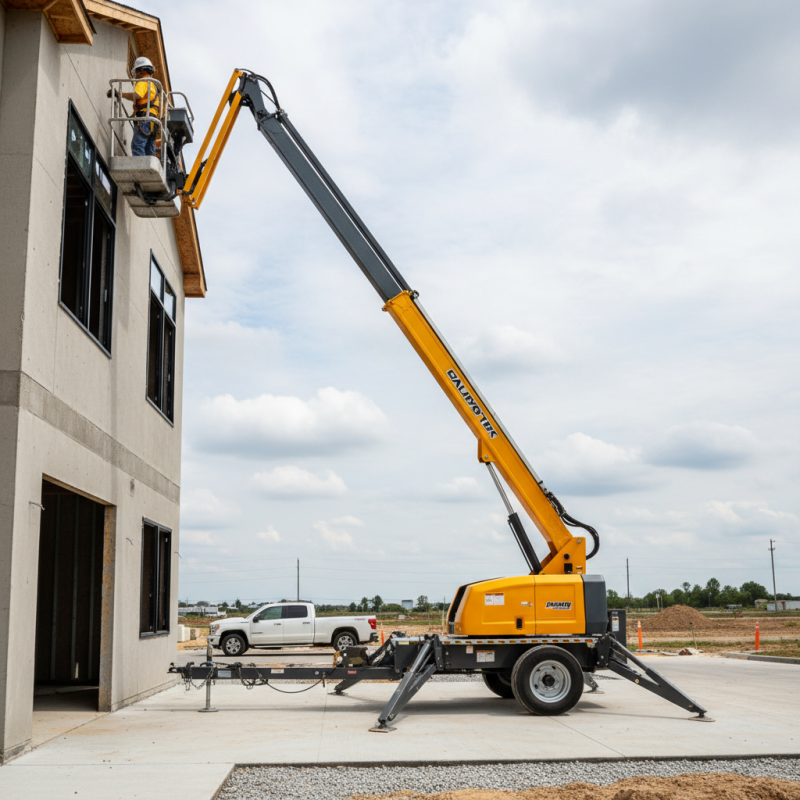
What is a Towable Boom Lift and How Does It Work?
A Towable Boom Lift is an essential piece of equipment in many industries. According to industry expert John Hartman, “The Towable Boom Lift makes accessing high spaces both safe and efficient.” These lifts provide flexibility and mobility, allowing users to reach elevated work sites quickly.
These machines are often lightweight and can be towed behind a vehicle. Their compact design is beneficial for tight spaces. However, it's crucial to understand their operational limits. Not all terrains are suitable for Towable Boom Lifts. Users must evaluate ground stability and surface type before deployment.
While Towable Boom Lifts enhance productivity, they require skilled operators for safety. Proper training is vital to maximize their potential. Observing best practices can prevent accidents and ensure effective usage. Exploring all aspects of Towable Boom Lifts reveals both advantages and potential challenges. Therefore, knowledge and preparation are key.
What is a Towable Boom Lift?
A towable boom lift is a versatile piece of equipment used to reach elevated areas. It consists of a platform connected to a long arm, allowing workers to access heights safely. This type of lift can be easily transported from one job site to another. Typically, it can be pulled by a vehicle, making it convenient for contractors.
These lifts are popular in construction, maintenance, and tree trimming tasks. They offer significant mobility and flexibility. Operators can position them on uneven ground or tight spaces. However, using a towable boom lift requires skill and attention. Miscalculating the stability can lead to accidents. It's important to inspect the lift before use to ensure safety.
Despite their benefits, towable boom lifts can pose challenges. They might not handle high winds well. Understanding weight limits is crucial. Sometimes, a little extra caution can prevent mishaps. Each job may require different settings and adjustments, which can be cumbersome. Regular training is essential for operators to improve their skills and safety awareness.
Key Components of Towable Boom Lifts
Towable boom lifts are essential for various construction and maintenance tasks. They are designed for easy transport and set up. Key components include the boom, platform, and trailer. The boom extends to heights ranging from 30 to 60 feet. This flexibility is crucial for reaching high areas safely.
The hydraulic system operates the boom's movement. It provides smooth transitions when lifting and lowering personnel. According to industry reports, operators can achieve a 20% increase in productivity using these lifts. The platform typically accommodates two to four workers. Safety features like guardrails and harness attachment points are critical. They ensure worker safety while handling tasks at height.
The trailer allows for easy towing by a vehicle. Yet, some models may not balance well during transit. This can pose risks. Regular maintenance is important for safety. A study suggests that 30% of lift accidents result from equipment failure. Periodic checks help keep these devices safe and efficient. Proper loading and unloading are also vital to avoid accidents.
What is a Towable Boom Lift and How Does It Work? - Key Components of Towable Boom Lifts
| Component | Description | Functionality |
| Boom Arm | The extendable arm that reaches up and out to lift workers and equipment to high places. | Provides vertical and horizontal reach for accessing elevated work areas. |
| Platform | The surface where workers stand while using the lift. | Supports personnel and equipment at height, ensuring stability. |
| Tow Hitch | The connection point for attaching the boom lift to a towing vehicle. | Facilitates easy transportation to different job sites. |
| Control System | The interface used to operate the boom lift's movements. | Allows operators to raise, lower, and maneuver the lift safely. |
| Stabilizers | Support legs that ensure stability while the lift is in use. | Prevents tipping and enhances safety during operation. |
How Towable Boom Lifts Operate Mechanically
Towable boom lifts are fascinating machines used for lifting tasks. They consist of a boom arm connected to a platform, allowing users to elevate themselves to significant heights. The design is compact, making them easy to transport. But how do they work mechanically?
The operation relies on a hydraulics system. When the operator engages the controls, hydraulic fluid flows through the system. This process raises or lowers the boom. The balance of the machine is crucial. If the lift is not stable, it might tip over. Operators must ensure the ground is level before deployment.
Another aspect to consider is the safety features. Most towable boom lifts come with safety harness attachment points. Yet, many users overlook these in haste. Ignoring safety can lead to serious accidents. Operators should reflect on their practices, ensuring they use the lift responsibly.
Regular maintenance checks also matter. A neglected machine might not function as intended, resulting in unexpected malfunctions.
Applications and Benefits of Using Towable Boom Lifts
Towable boom lifts are versatile tools in various industries. They can reach high places quickly and efficiently. Construction sites often use them for maintenance and installation tasks. Their portability is a significant advantage. Workers can easily transport these lifts on trailers to different job sites.
In addition to construction, towable boom lifts are valuable for tree trimming and building maintenance. The adjustable height allows workers to perform tasks at various elevations. This equipment is also a safe alternative to ladders. However, operators must undergo proper training. Misuse can lead to accidents or equipment damage. Regular checks are necessary to ensure safety features are functioning.
Using a towable boom lift can increase productivity. It saves time compared to traditional methods. However, it requires careful planning and considerations of space. Analyzing the terrain is crucial before deployment. Improper placement can cause stability issues. As with any lifting equipment, awareness and caution are essential.
Safety Considerations When Operating Towable Boom Lifts
Operating a towable boom lift requires careful attention to safety. According to industry reports, nearly 67% of accidents arise from improper use or lack of training. Before utilizing a towable boom lift, it's crucial to assess the worksite. Ensure the ground is stable and can support the lift’s weight. This is not always straightforward. Uneven terrain can lead to tipping hazards.
Workers should wear appropriate personal protective equipment (PPE). Hard hats, gloves, and harnesses are essential. A staggering 42% of fall-related incidents occur because safety harnesses are not used. Training programs can be inadequate. Regular safety meetings can enhance awareness. Operators should also constantly inspect the equipment. Signs of wear or damage can lead to severe malfunctions.
Moreover, implementing a thorough pre-operation checklist is vital. A report highlights that 50% of lift-related injuries could be avoided with better maintenance practices. Ensure that all parts are functioning correctly before use. Communication among team members is also important. Miscommunication can lead to accidents. It’s important to reassess and improve safety protocols regularly. Learning from past incidents is key to preventing future injuries.