Why Choose Plastic Profiles for Global Sourcing?
Global sourcing is not simply a search for the lowest price. It is a practical decision involving material performance, production consistency, logistics, and supplier credibility. Plastic profiles can support this decision because they offer flexible shapes, controlled dimensions, and material options for construction, furniture, transport, glazing, and industrial equipment.
Dr. Tim A. Osswald, a respected polymer-processing expert, offers a useful reminder: “Plastics processing is not an art; it is a science.” That principle matters during international purchasing. A reliable supplier should explain resin selection, extrusion temperature, dimensional tolerances, surface finish, and quality-control methods. Buyers should also request samples before approving large orders. Small differences in wall thickness can affect assembly, sealing, and long-term stability.
The strongest sourcing programs examine more than unit cost. They compare tooling charges, minimum order quantities, packaging, lead times, and shipping risks. UV resistance may matter in outdoor applications. Flame performance may matter in public or commercial environments. Food-contact or electrical requirements may require documented testing. Certifications should be verified, not merely displayed in a brochure.
Plastic profiles can simplify complex designs, but they are not automatically the best choice. Poorly specified materials may warp, fade, crack, or fit badly. That is an uncomfortable possibility. Experience shows that supplier audits and production samples often reveal problems early. Global sourcing becomes more dependable when technical communication is clear, records are traceable, and both sides are willing to question convenient assumptions.
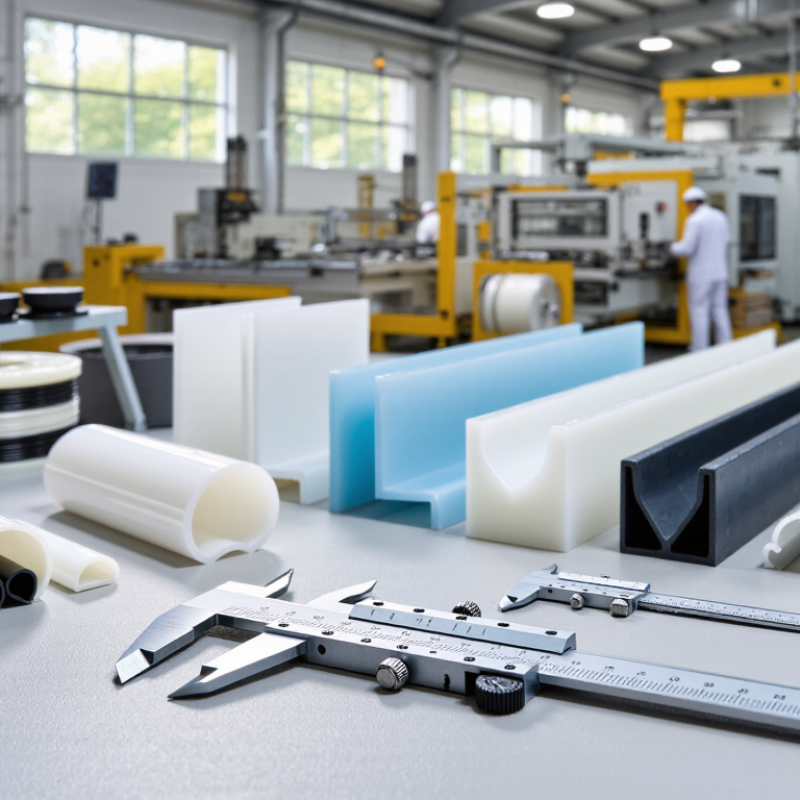
Plastic profiles are continuous shapes made from polymers such as PVC, polyethylene, polypropylene, or engineering plastics. Unlike molded parts, they keep one cross-section along their length. Think of a window seal, cable channel, drawer edge, or protective trim. They look simple. Their geometry often controls fit, sealing, movement, and installation speed. For global sourcing, understanding this structure helps buyers compare suppliers honestly.
Manufacturing usually begins with resin selection and a carefully designed die. Pellets are dried when moisture could weaken the surface or cause bubbles. An extruder melts the material and pushes it through the die. Calibrating tools then cool and stabilize the emerging profile. Pullers set the speed, while saws or blades cut exact lengths. Some profiles receive drilling, co-extrusion, surface treatment, or flexible inserts. Quality teams check dimensions, color, hardness, impact resistance, and batch consistency. A caliper catches errors. A simple test can expose a serious weakness.
Experienced sourcing teams request drawings, tolerances, resin data, and sample approvals before production. They also ask how scrap is controlled and how changes are recorded. Material choice is rarely universal; outdoor exposure, heat, chemicals, and load all matter. In sourcing practice, a cheaper profile can become expensive after poor fit causes rework. That lesson deserves attention. Still, no process is perfect. Clear specifications, traceable inspections, and practical testing reduce surprises across borders. This makes plastic profiles useful for repeatable manufacturing in many markets.
Global sourcing needs plastic profiles that remain stable across climates, suppliers, and transport routes. Material choice sets the foundation for that stability. Rigid PVC suits window trims, cable channels, and indoor construction parts. It offers useful stiffness and consistent extrusion. PE and PP work well for lightweight guides, protective edges, and moisture-prone applications. They resist water and many common chemicals. TPU adds flexibility where profiles must bend repeatedly without cracking. It costs more, though.
Design decisions matter just as much as resin selection. A simple cross-section usually reduces tooling cost and production risk. Thin walls can lower material use, but they may warp during cooling. That trade-off deserves testing. Co-extrusion can combine a rigid core with a softer sealing surface. It is practical for gaskets, drawer channels, and protective strips. Engineers should define tolerances, corner radii, hole positions, and cut lengths before requesting quotations. Small changes can affect dies, packing, and shipping volume.
In sourcing projects, request samples from the intended production line, not only polished prototypes. Compare dimensions after heat exposure, humidity, and repeated handling. Check surface color under natural light. It can reveal batch variation. Ask for resin documentation, inspection records, and destination-market compliance evidence. Packaging also needs attention; long profiles may bend inside weak cartons. A perfect specification is rarely perfect in production. Leave room for measured improvements after the first trial.
Representative material properties help buyers match plastic profiles with transport, durability, moisture, and processing requirements.
Lower-density materials such as polypropylene and high-density polyethylene can reduce shipping weight, while PVC offers a balance of rigidity and dimensional stability. ABS and polycarbonate are suitable when impact resistance and appearance are important. Polyamide provides strong mechanical performance, but its higher moisture absorption should be considered in precision applications. Values are representative typical ranges and vary by grade, additives, processing method, and test standard.
Plastic profiles offer international buyers a practical balance of weight, durability, and design flexibility. Their low density can reduce freight weight and simplify installation on site. In factory audits, buyers often find that custom extrusion replaces several joined components. That can reduce assembly time and potential leakage points. Plastic profiles also resist moisture, many chemicals, and outdoor corrosion. These properties support applications in construction, transport, furniture, and industrial equipment.
According to PlasticsEurope’s Plastics—The Fast Facts 2023 report, global plastics production reached about 400.3 million tonnes in 2022. This large production base supports broad material availability and competitive sourcing options.
The sourcing advantage depends on technical control. Buyers should request dimensional tolerances, impact results, color consistency data, and batch traceability. Profiles made from PVC, ABS, polycarbonate, or recycled polymers perform differently under heat and ultraviolet exposure. A lower purchase price may create higher replacement costs. That mistake is common. OECD’s Global Plastics Outlook reports that only 9% of plastic waste was recycled from 2019 data, so end-of-life planning deserves attention.
Ask suppliers about recycled content, recyclability, and production scrap handling. Independent testing can verify fire behavior, weathering, and mechanical performance against the required market standards.
Packaging also matters; long profiles can bend during international transport without proper support. In practice, small sample runs reveal problems that drawings miss. The process is not perfect. That is precisely why transparent specifications and documented inspections remain valuable for global buyers.
Plastic profiles support global sourcing because their geometry can be repeated with tight control. However, quality depends on more than a clean extrusion line. PlasticsEurope reported 413.8 million tonnes of global plastics production in 2023. That scale makes supplier verification essential. Buyers should review material certificates, dimensional records, batch traceability, and process-control data before approving samples.
Consistency matters most.
A capable supplier matches resin grade, color, hardness, wall thickness, and surface finish to the application. Measuring critical dimensions with calibrated gauges reduces disputes after shipment. The ISO Survey has reported more than one million ISO 9001 certificates worldwide, showing how widely formal quality systems are used. Certification helps, but it does not replace production evidence. A supplier may pass an audit and still miss a small corner radius during a busy production week.
Compliance requires a documented material review. Suppliers should identify applicable requirements for the destination market, including chemical restrictions, electrical safety needs, and recycling information. Test reports should state the standard, method, laboratory, and sample date. For customized profiles, engineers can use drawings, pilot tooling, and first-article inspection before mass production. Small changes in die design can affect sealing, assembly, and scrap rates. Those effects are easy to underestimate. Regular communication, realistic tolerances, and independent testing create stronger control than promises alone. Mistakes can still happen, so corrective-action records should remain visible and measurable.
Why Choose Plastic Profiles for Global Sourcing?
Choosing a global plastic profile supplier requires more than comparing unit prices. Buyers should examine material quality, production control, and communication habits. Request clear specifications for dimensions, wall thickness, color, surface finish, and tolerance. A reliable supplier should explain how these details are measured during production.
Factory evidence matters. Ask for recent inspection records, material certificates, sample approvals, and traceability documents. Confirm whether the supplier can maintain consistent output across repeated orders. Small changes in tooling or cooling can affect profile straightness, especially in long sections. Packaging also deserves attention. Profiles may arrive scratched, bent, or exposed to moisture if protection is weak. That risk is easy to underestimate.
Tips: Compare total landed cost, not only the quoted price. Include tooling, freight, packaging, testing, duties, and possible rework. Check production capacity before promising delivery dates. Use a written quality agreement with measurable acceptance criteria. Video calls can help, but they cannot replace independent inspections. No supplier review is perfect. A spreadsheet may miss a noisy extrusion line or unclear warehouse labeling. Build a trial order into the sourcing plan, then evaluate samples, timing, documentation, and responsiveness before scaling up. Short feedback loops matter. So does honest reporting when a problem appears.
| Evaluation Dimension | Why It Matters for Plastic Profiles | Practical Data or Benchmark | Evidence to Request from a Supplier | Suggested Weight |
|---|---|---|---|---|
| Material Selection | The polymer determines strength, flexibility, weather resistance, temperature performance, and service life. | Common profile materials include PVC, PE, PP, ABS, TPE, TPU, and polycarbonate. Selection should match operating temperature, chemical exposure, UV exposure, and load requirements. | Material grade, technical data sheet, safety data sheet, color specification, recycled-content declaration, and application test results. | 15% |
| Dimensional Accuracy | Consistent dimensions support proper assembly, sealing, sliding, and interchangeability across production batches. | The applicable tolerance depends on profile size, material, extrusion process, and drawing requirements. Tolerances must be agreed in writing before production. | Approved engineering drawing, tolerance table, first-article inspection report, measurement method, and calibration records. | 12% |
| Compliance and Market Access | Different markets may restrict chemicals, heavy metals, flame performance, food contact, or electrical properties. | Typical compliance reviews may include REACH, RoHS, conflict-minerals declarations, food-contact rules, and applicable local product regulations. | Recent third-party test reports, declarations of conformity, restricted-substance statements, and traceable raw-material documentation. | 15% |
| Production Capability | A supplier must be able to maintain stable output, profile geometry, color, and surface finish at the required volume. | Evaluate extrusion lines, co-extrusion capability, cutting length, punching, drilling, printing, assembly, and packaging capacity. | Capacity plan, equipment list, process-flow chart, maintenance records, sample production data, and contingency plan. | 10% |
| Tooling and Development | Custom dies and fixtures influence start-up cost, development speed, profile accuracy, and long-term ownership. | Clarify tooling ownership, storage period, modification charges, repair responsibility, and approval stages before placing an order. | Tooling quotation, die drawing, trial schedule, acceptance criteria, ownership clause, and tooling-maintenance terms. | 8% |
| Minimum Order Quantity | MOQ affects inventory investment, cash flow, storage space, and the risk of obsolete colors or dimensions. | MOQ is usually influenced by resin purchasing, color matching, production changeover, packaging, and tooling economics rather than profile length alone. | MOQ by profile, color, material, and order frequency; surcharge policy for small batches; mixed-load options. | 7% |
| Lead Time and Delivery Reliability | Long or unpredictable lead times can interrupt production and increase safety-stock requirements. | Separate tooling, sampling, production, and transport lead times. Confirm whether quoted lead time starts after approval, deposit, or raw-material confirmation. | Delivery-history data, production schedule, shipment milestones, escalation procedure, and backup capacity plan. | 10% |
| Quality Management | Extrusion defects such as warping, bubbles, uneven walls, color variation, and surface marks can cause assembly and performance failures. | Quality controls should cover incoming resin, in-process dimensions, appearance, mechanical properties, packaging, and final release. | Quality manual, inspection plan, control charts, nonconformance records, corrective-action reports, and sample retention policy. | 12% |
| Packaging and International Logistics | Long profiles can bend, scratch, or deform during handling and overseas transportation. | Packaging should protect against abrasion, moisture, compression, contamination, and excessive bending while maximizing container utilization. | Packaging specification, loading photographs, carton or pallet dimensions, shipping marks, Incoterms, and damage-claim process. | 6% |
| Total Landed Cost | The lowest unit price may not provide the lowest overall cost after tooling, freight, duties, inspection, inventory, and quality losses. | Compare material price, conversion cost, tooling amortization, packaging, freight, insurance, duties, testing, and expected defect costs. | Itemized quotation, payment terms, freight assumptions, tariff classification support, price-adjustment formula, and warranty terms. | 10% |
| Sustainability and Circularity | Recyclability, recycled content, energy use, and end-of-life options increasingly influence procurement decisions and regulatory reporting. | Assess whether the profile is mono-material, recyclable in the target market, and supported by verified recycled-content information. | Recycled-content percentage, chain-of-custody documents, environmental declarations, waste-reduction data, and recycling guidance. | 5% |
| Total Suggested Evaluation Weight | 100% | |||